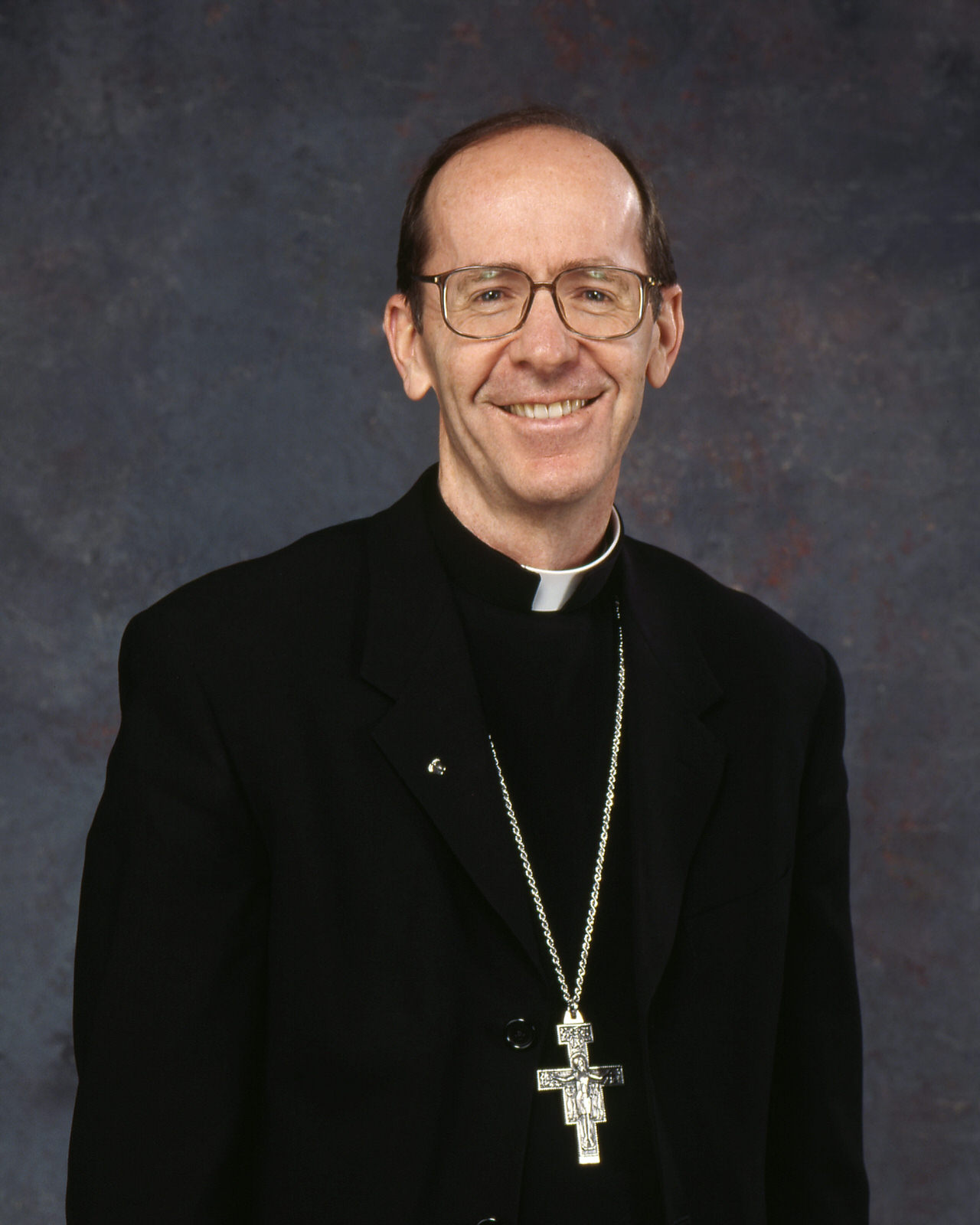
Bishop Olmsted
Diocese of Phoenix1
A Contrite and Grateful Heart
July 28, 2013
"I will give thanks to you, O Lord, with all my heart." (Ps 138)
Anniversaries are a time to give thanks to the Lord, a time to recall our sins and ask forgiveness, and a time to praise God for His countless blessings.
40 years ago, I had the blessing of being ordained a priest: July 2, 1973. Earlier this month, at our annual family reunion, my dear parents, siblings and a large number of the extended clan celebrated with me this 40th anniversary. We began with Holy Mass, then proceeded to enjoy a potluck lunch, Irish jokes, storytelling, funny skits and lots of singing. In December of this year, my family will gather for a far more important anniversary, as my parents celebrate their 70th Wedding Anniversary.
Bishop Olmsted
Diocese of Phoenix1
Earlier this week marked another historic milestone: the 45th anniversary of the famous encyclical of Pope Paul VI, HUMANAE VITAE, a Latin title meaning “Human Life.” We praise God for this great gift of prophetic teaching about marriage, procreation, natural family planning and human life.
As we celebrate anniversaries such as these, it is good for us to do two things: to thank God for His many blessings over the years, and to ask forgiveness of God for our sins. Let me say a few things about each of these, beginning with forgiveness.
No matter how much we desire to love God, no matter how sincere our intention to love our spouse, our children, our parishioners, and whomever God gives us to love, to our own embarrassment we fall short, over and over. For good reason, the Mass has, at the start, a penitential rite. We begin the greatest and holiest Sacred Rite of Thanksgiving, the Eucharist, by humbly confessing our sins and asking God to forgive us. It is also instructive that, in the prayer that Jesus taught us to say, we find the words: “Father, …forgive us our trespasses as we forgive those who trespass against us.” Our prayer would be incomplete without this sincere petition.
In the Liturgy of the Hours, which many of us pray each day, we repeat, every Friday, Psalm 51, which has these words: “My offenses truly I know them; my sin is always before me…O purify me, then I shall be clean; O wash me, I shall be whiter than snow.”
It is important, as American Catholics, to ask God for forgiveness on the 45th anniversary of HUMANAE VITAE. This prophetic document on human life and its origins has been a source of wisdom and joy to many married couples over the past 45 years; it has helped millions to avoid the sins of contraception and abortion, and to understand God’s plan for a joyful marriage. But, sadly, its truth has been frequently rejected, even opposed by members, even leaders, of the Church. Its rejection has led to government-forced and -funded abortions, to a catastrophic escalation of divorce and the breakdown of the family, to the demeaning of women’s dignity through pornography and to great confusion about femininity and masculinity, and many other evils.
Our first reading today, from the Book of Genesis (18:20-32), recounts the sins that were destroying whole cities. God says: “The outcry against Sodom and Gomorrah is so great and their sin so grave, that I must go down and see…” Recall that God spoke these words not in rage but out of love. God helps us to see our sins because He loves us. He knows the terrible scars and suffering caused by sin, and how we cannot understand sin without help. Thus, the Catechism (#387) teaches, “Without the knowledge Revelation gives of God we cannot recognize sin clearly and are tempted to explain it as merely a developmental flaw, a psychological weakness, a mistake, or the necessary consequence of an inadequate social structure, etc. Only in the knowledge of God’s plan for man can we grasp that sin is an abuse of the freedom that God gives to created persons so that they are capable of loving Him and loving one another.” Thus, it is not surprising that, in today’s sacred readings, God speaks of both sin and prayer, of the need for forgiveness and the need to praise and thank God with all our heart.
Let us turn, now, to the second action that should be part of every anniversary celebration: giving thanks to the Lord. Our hearts overflow with gratitude when we recall all the good that the Lord has done for us. Thanksgiving deepens our appreciation of all the persons and relationships that the Lord has given to us.
Pope Francis wrote about this inspired reality in his recent encyclical letter LUMEN FIDEI (#38): “Persons always live in relationships. We come from others, we belong to others, and our lives are enlarged by our encounter with others.” Recognition of how God made us to be brothers and sisters to one another, and to be His beloved sons and daughters, leads us to see the wisdom of calling God “Father.” It also explains the close connection between thankfulness and faith. For this reason, Pope Francis writes (#39), “It is impossible to believe on our own. Faith is not simply an individual decision… not a completely private relationship…between an autonomous subject and God…faith…always takes place within [the Church’s] communion.”
This explains why both forgiveness and gratitude inspire evangelization. When we recognize with a grateful heart these great gifts of God, then we desire to share His gift of faith with others; we wish to help others discover and come to believe in the love of God. Thus Pope Francis continues in his encyclical (#39), “…those who believe are never alone… faith tends to spread as it invites others to share in its joy.”
Anniversary celebrations are wonderful moments of grace. They help us to slow down and to notice God’s many gifts. They move us to humbly say to Him and to others, “I am sorry for choosing to do wrong and for failing to do good; please forgive me.” They help us to give praise and fitting worship to God.
In the Gospel today, the followers of Jesus were inspired to say to Him: “Lord, teach us to pray.”
Of all the many things we Christians do, none is more necessary than praying. In prayer we open ourselves to God, we surrender to His plan; we trust the truth of His teaching.
Prayer is vital to growing in holiness. It helps us to discover our sins and to confess them, then to avoid sin in the future. Prayer gives us the grace and the desire to remain faithful in marriage or priesthood or whatever our vocation in life, to convert our fears into courage, to deepen our love for Christ and for His Church.
How did Jesus respond to the request, “Lord, teach us to pray?” First, He taught what words to say: i.e. the Lord’s Prayer. Then, He went on to tell a parable to underscore the need for praying always; and thirdly, He assured them of prayer’s effectiveness, saying, “Everyone who asks receives, the one who seeks finds, and to the one who knocks, the door will be opened.”
At the end of today’s Gospel passage, Jesus says, “If you, then, who are wicked, know how to give good gifts to your children, how much more will the Father in heaven give the Holy Spirit to those who ask Him.” Luke 11:13
“How much more” is God our Father than we can ask or imagine! God is far more merciful than we dare to hope. God is far more aware of our daily sorrows and trials than we are ourselves. God is far more attentive to our prayers than we are in praying them. He is always and at all times our merciful Father who created us and redeemed us in love. With lively faith, then, let us say: “Father, forgive. Father, Hallowed be thy name.”1
References
Images
See Tabs: (Resources / Website / Image Resources) for common image sources.